COME SEE US AT ASSH 2026 ✦
BOSTON ✦
SEPTEMBER 17–18 ✦
BOOTH 1930 ✦
COME SEE WHAT WE'VE ENGINEERED ✦
COME SEE US AT ASSH 2026 ✦
BOSTON ✦
SEPTEMBER 17–18 ✦
BOOTH 1930 ✦
COME SEE WHAT WE'VE ENGINEERED ✦
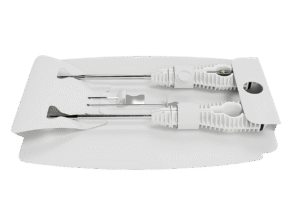
See The Anchor Line™ CMC Suspensionplasty System in Action
Schedule Your-In Person Demo!
ORIGINS
Board-certified hand surgeon Jeanne L. DelSignore, MD—co-developer of the Anchor Line™ CMC Suspensionplasty System—pioneered the Suture Suspension Arthroplasty (SSA) technique in 2009.1 Her landmark 12- to 14-year follow-up study demonstrated durable outcomes2 and received the 2021 ASSH Sumner Koch Award for its potential to create significant future clinical impact. The Anchor Line™ CMC Suspensionplasty System builds upon this award-winning approach to provide a highly reproducible, stable, bone-to-bone suture suspension repair.
1. DelSignore, J.L., Accardi, K.Z. Suture Suspension Arthroplasty Technique for Basal Joint Arthritis Reconstruction. Techniques in Hand and UpperExtremity 2009 Vol 13 (4)
2. DelSignore J.L, Zambito K, Ballatori S.E. Suture Suspension Arthroplasty for Thumb Carpometacarpal Arthritis Reconstruction: 12- to 14-Year Follow-up. HAND 2020; Vol 18. Issue 1 https://doi.org/10.1177/15589447211003176
ENGINEERING
Anatomical Reconstruction: Designed to restore native TMC joint kinematics and metacarpal height, without tendon graft harvest or weaving.
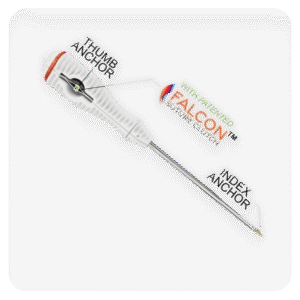
Controlled Tensioning: The proprietary Falcon Suture Clutch enables incremental, dynamic tensioning with provisional fixation before final knot lock.
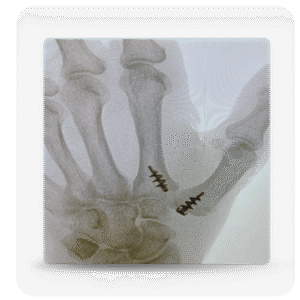
Stable Metacarpal Alignment: Engineered to maintain vector alignment between the first and second metacarpal bases, supporting the sling through ligamentous healing.
ADVANTAGES
Patient Incision Site: Single incision
Patient Comfort: No exposed hardware
Patient Procedure Simplicity: No multiple suture strands to manage
Patient Tissue Preservation: No tendon harvesting or weaving